世纪AI审判悄然结束
The AI trial of the century ends with a whimper
世纪性的AI审判最终以微弱的方式落幕,未能公开关键技术细节和决策过程。审判结果未提供具体数据或指标,仅以概括性结论结束,留下多个未解之谜,包括影响范围和责任划分等。这导致一些核心信息永远无法知晓,引发了公众对AI透明度和伦理问题的持续关注。
and so there are some things we will never know
May 18, 2026
[excuse brevity; very limited bandwidth on a train]
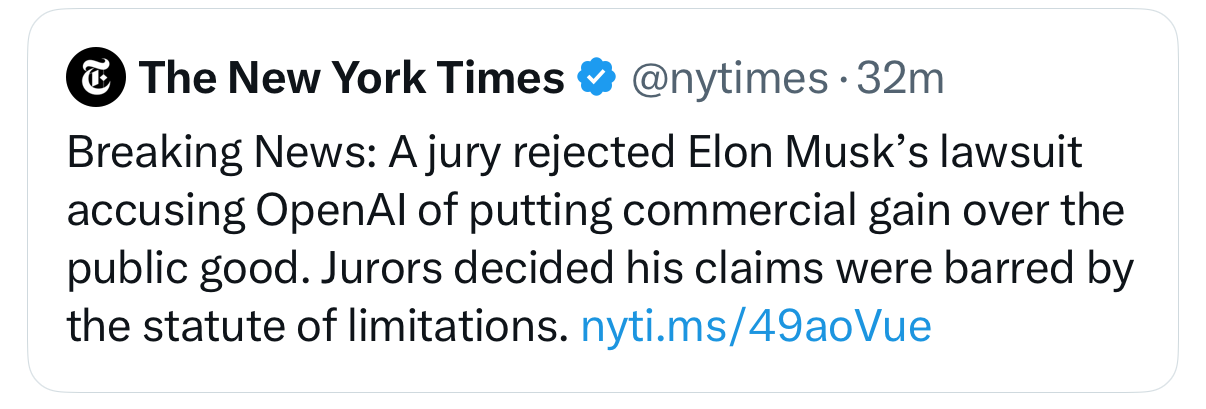
The AI trial of the century has just ended with a procedural whimper rather a bang; the jury agreed that Musk was too late but never weighed in on the questions of whether OpenAI did was legitimate.
We will never know what the world might be like had OpenAI been forced to fully follow its original mission (as reprinted below).

By Gary Marcus · Thousands of paid subscribers
"Marcus has become one of our few indispensable public intellectuals. The more people read him, the better our actions in shaping Al will be." - Kim Stanley Robinson, author of Ministry for the Future
By subscribing, you agree Substack's Terms of Use, and acknowledge its Information Collection Notice and Privacy Policy.
Discussion about this post
The procedural dismissal is more consequential than a substantive verdict would have been, and for the opposite reason most people assume. A ruling on the merits would have established precedent either way. The statute of limitations dismissal established something worse: the absence of precedent. Every future AI company that starts as a mission-driven entity now knows the conversion playbook is legally viable as long as you manage the timing. Start nonprofit to attract idealistic talent and philanthropic capital, build under the mission umbrella, then convert once the technology is valuable enough to justify the pivot. If anyone objects, run the clock.
The deeper problem is that the nonprofit-to-commercial conversion is a one-way valve and this trial was the last realistic mechanism for establishing that it could be forced back open. None of the commercial conversions in AI have ever reversed. Each one permanently reduces the amount of mission-aligned research in the field by one entity. the trial ending on procedure rather than substance means the valve is now permanently stuck open. thats an AI governance outcome that happens to have been delivered by a legal proceeding, and the governance implications will outlast the trial by decades because every future mission-to-commercial conversion now has a template and no legal constraint.
This feels like a stupid question but why didn’t anyone try this as soon as they rehired Altman?
Ready for more?
来源:Gary Marcus:The Road to AI We Can Trust · garymarcus.substack.com